
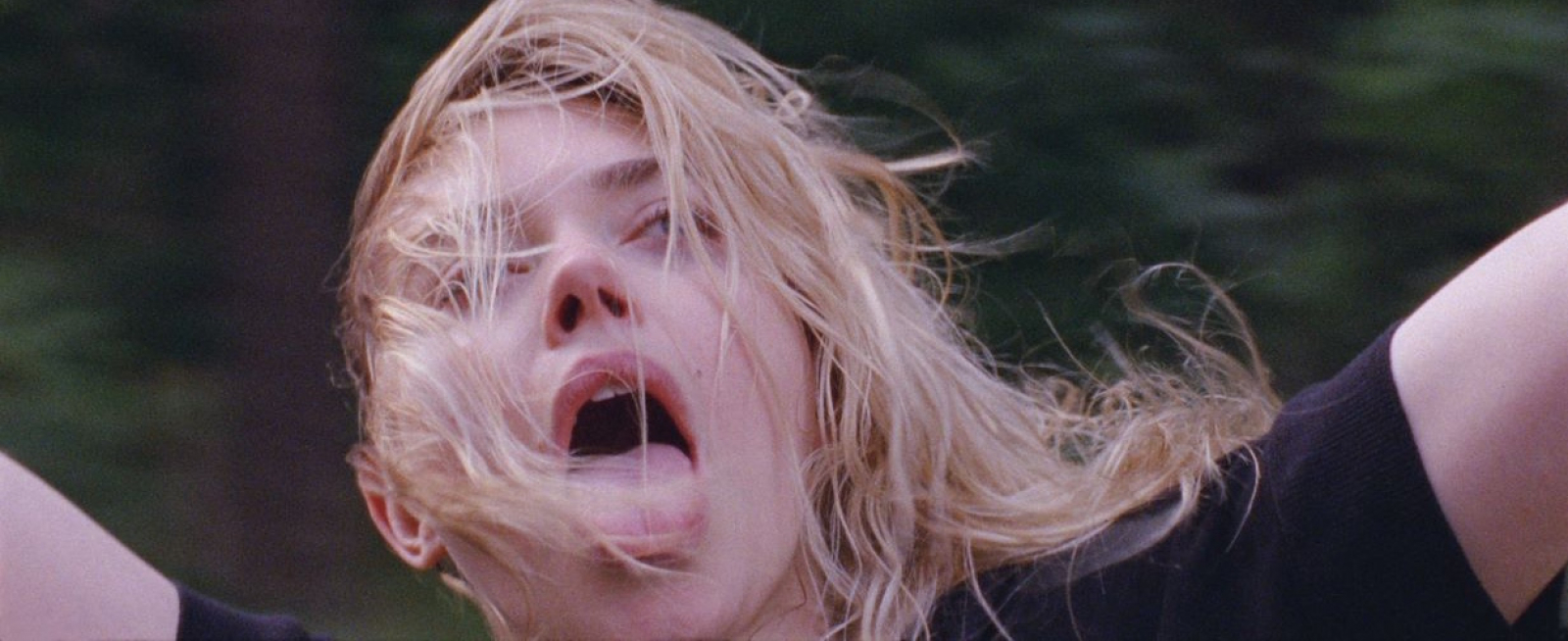
“Memories are stories. So you better come up with one you can live with.”
— Imogen Poots as Lidia Yuknavitch, The Chronology of Water (2026)
“How many miles does it take? To swim. To the self. How. Many. Fucking. Miles.”
— Imogen Poots as Lidia Yuknavitch, The Chronology of Water (2026)
I feel the murmur within. In Loretta Lynn’s memoir Coal Miner’s Daughter, she calls that intuition change is coming. When a baby grows. Bleeding for the first time. The body witnessing the passage of what humans call time, an illusion brought on by the slow decay of our flesh and bones, cradling, or pinning us down, in this reality.
The craft returned to the body tonight, before Jesus—the thesis of The Chronology of Water, both film and memoir. He is God.
I’m toasting Creation, chasing the muses at the bottom of a bottle of wine, tonight, tomorrow, for eternity. Candles lit, head aglow, hunger heart. 90s mommies blaring through the speaker. Lofi videos spinning me round and round. All the things I pushed away as far too frivolous for Political Writing. For Indigenous Writing. Gratuitous. As if some part of me forgot this writer’s complex is where I live, breathe, survive. That it chains me to this body, this world. Keeps me up at night, running memories into lines, tears lighting my face in the dark. Takes me to my keyboard when I wake up, mind full of dreams. How many pages does it take to get to the self?
I must be sick. Don’t I know it. The Chronology of Water (2026), a rape movie! I’m buzzed off a rape movie? Inspired by a rape movie. The critics will say. The Boys, queer, and straight (if you believe in such a thing). Probably even some of The Girls, and those of us who went underground. Like when Janelle went down the rabbit hole and visited Bowie. Much too ferocious, yet not enough teeth, too reminiscent of Teeth (2007), too post-Peele in an oversaturated domestic horror market, not camp enough to settle the gag reflex, too much to be anything other than feminist art. A third year feminist horror. Not the body, again! Or, should I say, not a woman’s body, again. Because I just watched HIM (2025), 10 years of media theory school behind me, and was left wondering what the film was even about. I cried, along with everyone else, when the Von Erich brothers embraced in heaven (The Iron Claw, 2023).
Nevermind, which is the name of Director Kristen Stewart’s co-owned production company. I’ve stopped caring about the same tired arguments born of momentary alienation—a feeling easily driven away when pressing pause, or closing the book—from creation that chooses to live outside the male gaze of cinema past and present. Kristen Stewart gave several interviews over the last year promoting her directorial debut The Chronology of Water. She denounced an industry that aligns itself with gender equity, while ignoring and misaligning women’s stories. She spoke about the illusion of male genius, and the practice of method acting as a refusal to be vulnerable, when all creative craft should be innately vulnerable. As Jim Belushi as Ken Kesey teaches Lidia Yuknavitch, in The Chronology of Water, kill the ego, find a truth.
I gotta get out a review tonight, lest Yuknavitch’s prose style, painfully typed across the screen by Stewart, creeps into my creative prose, like a third year feminist horror of a human who just discovered body horror. I admit these dear creatures exist, but contend they deserve to be loved into whole creative beings, just as much as the baby queer who just discovered blowjob and douching poems. I gotta drink a bottle of rosé and cry and listen to wailing women and stumble down the stairs and laugh at my own reflection in the mirror and then finally pound the keys until I make a blurry mess that I self-publish the next day because I know the importance of box office for a film like The Chronology of Water, in a lean industry caught somewhere between the fall of cinema elitism and the background noise of the streaming era. I know there is an editor somewhere, dying to take a red pen to that sentence. Humbly, tonight, at an altar of a half-baked Yuknavitch (who we love because she reminds us of the parts of ourselves we love because they helped us survive), fuck ‘em. Like Yuknavitch, I need to get back to me and, dare I say, She (Patti Smith, “Dancing Barefoot,” 1979).
Spit it Out
Everyone wants The Chronology of Water to be a visualization of The Body Keeps the Score (2015). Every critic needs this film to be trauma written on the war-torn nerves of a generation of women who ate pillow when their fathers raped them. No one wants to talk about rape, though. About patriarchy. About a society that functions through the normalized, quiet abuse of women. About staggering rape statistics, still. How every woman, queer, trans person has a rape story. Because no one wants another rape story.
Memory is fragmented. Trauma breaks the brain. Sensation, through exaggerated noise, rules the collage of image and sound that composes The Chronology of Water. Like glass cutting the skin, with every decibel heard. Patriarchy is a prison, the world is torture, when the only man you ever loved raped you.
In adulthood, rape bleeds into sexuality. Fantasizing about your rapist father, the first time you shoot cum. Fucking every person in sight, yet still getting labeled as “feminist” or “women’s” lit. Classic, in the queer way. Fucking yourself back to life. Tied in knots by Kim fucking Gordon. An angel, for once. Fuck trip with The Girls. Fucking to hurt men the way they hurt you.
So, what collects the shards of glass and ties the fragments together?
Having read Yuknavitch’s anti-memoir years ago, from what I remember, it always comes back to the water. Lapping. Gushing. Rushing. Creating waves on the shore.
For Stewart, it comes back to the body. What is time if not anchored through the body. Time only exists on and in the body. The pattern of tile pressed into a fleshy thigh. Bloody chunks in ripples, like the sacred patterns of the universe found in wave formations on the sand, held within water making its way down the drain. Memories. Quiet stories. Revelations in the mundane. A divine kinship only an image can forge. So, if the critics, The Boys, The Girls, find themselves bemoaning a feminism they are so self-assured remains in the 90s, maybe this reality of fragments, short-circuited, up and down, in and out, is not theirs.
Blood, rushing, pouring, spouting out of every orifice. On fingers, fucking, tongues, licking. Drained out of the lifeless rosy lips of stillborn babies. The body, born with pussy, bleeding out of pussy, creaming from pussy, pissing out mouth, as Fiona Apple sings, when Imogen Poots as Yuknavitch is working on her writing, deep in craft.
Stewart’s adaptation of Yuknavitch’s memoir is an extraordinary achievement in the craft of body horror. From The Substance (2024) to Shell (2024), body horror is having a moment in the film industry, though the genre has always lived in feminist film and literatures. In return, I offer a fragmented review because how does one analyze a film like The Chronology of Water, a film that completely breaks from genre, creates its own spatiality, something never seen before, without dreaded spoilers. I offer how this film felt in my body, for once in history.
Stewart’s remarkable directorial work in The Chronology of Water is a long-delayed recognition of women writers and filmmakers working against the grain of masculinist culture in the 90s. Sook-Yin Lee’s film Paying for It (2024) similarly stands out as a revisitation of the feminist themes of the 90s, as held within, and understood through, the body.
My first introduction to Lee’s work was her book chapter “Yelling at the Crows.” Anyone who read or edited the feverish writing of my twenties knows there is a motif I return to: freeing oneself as an isolated queer youth among public library stacks. In my own fury of fragmented memory, I encountered, somewhere, Lee’s chapter, though I can’t remember now when it was written, or which collection it appeared in, for certain. “Yelling at the Crows” refused containment. The chapter read as part spoken word, part radio script, and part confessional non-fiction that would become an industry standard for years to come. In the 90s, Canadian media had no real language for the Asian Canadian feminist experience. No reference point. No canon. Lee is now that canon. Her work on “Yelling at the Crows” stands in stark contrast to other feminist essays of the time. Purposefully unpolished protest writing against Canada, imagined through the figure of Lee’s mother and her mental health, both failed by Canadian institutions and peoples. The crows. Canada. The literary industry. The film industry. Fighting over the scraps, like an old piece of pizza on the Downtown Eastside.
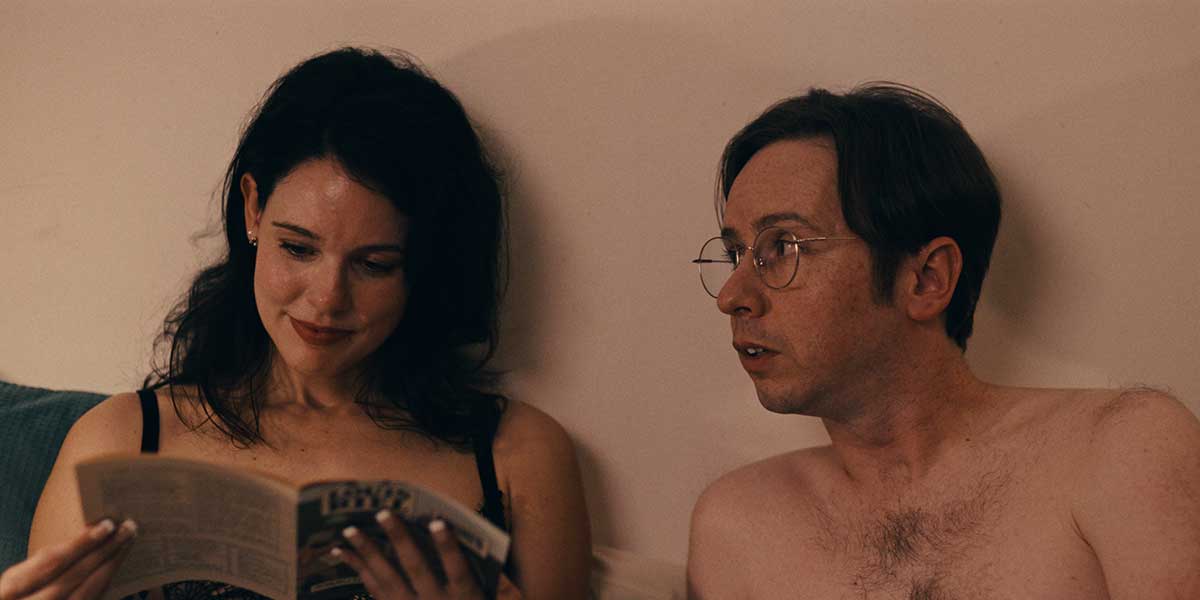
Like Yuknavitch, Lee insists that voice is form, too: fragmented, performative, unresolved. Not confession, but finding a story you can live with. Surviving Canada. Works like The Chronology of Water and “Yelling at the Crows” read less like the margins now, and more like the future. Lee’s body of work didn’t age into relevance. The culture caught up.
Lee’s career traces feminist refusal with remarkable clarity and consistency of creative vision. From her early writing about race, intimacy, mental health, and maternal inheritance, to her recent film Paying for It (2024), Lee insists on her holistic vision, which doesn’t leave anyone behind. I’m such a 90s bred queer punk, of course many an editor has chided my blind spot for men characters (frankly, bless them). The story Lee tells in Paying For It, and Stewart tells in The Chronology of Water, pushes me beyond black and white, past my comfort zone, due in no small part to the meta creative exchange between Lee and Chester Brown, who wrote and illustrated the graphic novel Lee’s film was adapted from. Paying for It doesn’t make monsters of men, or indict women, refusing the false allegory of the so-called “angry feminist.” Paying for It interrogates desire as a structure shaped by capitalism, gender, and power, asking, who tells the stories of sex workers? Lee insists on fragmentation, ambivalence, confrontation, and truth—on craft. Paying For It is a feminist resurgence long in motion, not a correction, to be sure.
The Taste of Bile
Throughout this review, I avoided calling The Chronology of Water a film about a woman’s experience. Imogen Poots as Lidia Yuknavitch imagines swimming until “she” transforms into a genderless amphibian. Rape bleeds into gender, too. How do you understand your gender as a self-determined act, when your body was used to imprison you? Trauma is arrested development. It pauses people in time, in their deepest pain, in their most harmful coping mechanisms. How do you reach a gender when you can’t even trust your own body? What is gender, if not anchored through the body? If immaterial (Sophie, “Immaterial,” 2018). My gender is swamp monster.
Still, as I was leaving the cinema, I overheard two film bros bemoan that there were “too many cuts” in The Chronology of Water, and they couldn’t pay attention. Unwittingly, they experienced exactly what Stewart wanted from them. Fragmentation of time. The traumatized body. How do you focus when you’re so goddamn angry everyday? At the world. At yourself. At your father. At your mother for letting it happen. We can denounce the gender binary at the level of the body, but patriarchy persists nonetheless. The tension between how we feel, and where we live, remains in the critical frameworks that holdover from the 90s, trying to put fragmented minds and broken bodies into marketable categories.
Early in my career, a white-passing “Métis” man critiqued my writing, without critiquing it. He wrote in his editor’s statement about heavy handed writing that simply reiterates the gory details of colonialism. We’re so much more than that, he said. Indigenous literature is for resurgence. Indigenous literatures should make us feel good, I guess he meant to say.
A contemporary “Indigenous” story doesn’t come from the body, it comes from the mind. From “Indigenous” Knowledge. Feminists know that all “Knowledge” comes from imperialism. In fact, the rise of Indigenous resurgence theory in literature and academia is what led many to take up “Knowledge” to write feel good texts “grounded” in plagiarism and appropriation. That’s the legacy of “Indigenous” literature, to an NDN like me, who knows what it feels like to be Native. Those are the horrors, the monsters, that keep me up at night.
Horror is also having a moment in “Indigenous” literature, driven by aesthetic fascination, with unclear connection to Native communities. Disembodied “Knowledge,” separate of Indigenous life. Don’t whistle at night, it brings out all the Redfaced monsters.
But the greats!, I know they’ll say. Eden Robinson. Indeed, one of the greats. My favourite work from Robinson is stories about Native cops getting dommed to deal with the shame of selling out their communities, before “Indigenous” literature put Robinson in a box.
The story of indigeneity in Canada and America isn’t a true story. If the story of indigeneity truly lived in the body, it would be one audiences couldn’t stomach. It would make audiences puke, like the audience member who couldn’t stomach Yuknavitch’s early writing in The Chronology of Water.
If Native lit truly came from the body, from lived experience, what would it say?
I’ve got “Indigenous” literature fatigue, including its aesthetics of “Indigenous” horror. Indigenous lit wants to claim me, police me, control me, like, so bad. Even though I always felt uneasy claiming it. Though I always felt held by feminist works like The Chronology of Water. Then, when I don’t play along, I’m not lifting up “Indigenous” people. That’s a lot of pressure to put on the shoulders of someone destined to disappoint, to crash out, to run. Indigenous literature is like a bad boyfriend who stalks you when he finds out you moved on.
My truth is, I don’t see my people in “Indigenous” literature.
Stewart, through Yuknavitch, is not advocating for making people puke with rape prose. No, she wants more for writers, for people called to the craft, to feeling, to truth; more for you, us. She wants us to be great, like the words of her mentor, the first man who exchanged intimacy with her, without sex. I’m still waiting to be great. My ego lives in the endless drone of my own voice. I need to hear myself speak, so I don’t feel the passage of time. Maybe I’ll get there, one day soon. Find my own allegories for violence, on the page, no longer on the body. Free myself from crows and monsters.
Because a body isn’t a wasteland if it can make something so beautiful as a child. Patriarchy isn’t necessarily a dystopia if a man can see a part of you, love a part of you, that you can’t even love. But you’ll have to check out The Chronology of Water for the skinny on that.





 Making People Puke&media=https://gutsmagazine.ca/wp-content/uploads/2026/01/chronologyofwater1.jpg)